Setting Up Your
Home Maintenance Schedule
Most homeowners only think about maintenance when something breaks. But a simple, consistent schedule prevents expensive emergency repairs, keeps your home running efficiently, and actually increases your property value over time. Here is how to set up a system that works without overwhelming you.
Let us be honest. When was the last time you thought about your home's maintenance schedule? If you are like most homeowners, the answer is probably "when something broke." That is completely normal. Life gets busy, and the home hums along quietly until it demands your attention with a puddle on the floor or a furnace that refuses to kick on in January.
But here is the truth I have learned from over 600 real estate transactions: the homes that hold their value best and cost the least to own are not the ones with the fanciest upgrades. They are the ones that received consistent, simple maintenance. A little bit of attention on a regular schedule prevents almost all of the expensive, stressful surprises that make homeownership feel overwhelming.
This guide will walk you through exactly what to do and when, broken down by month, season, and year. No complicated systems. No expensive tools. Just a practical schedule that fits into your life and protects the biggest investment you will ever make.
In South Jersey, our climate makes maintenance especially important. We get hot, humid summers that stress air conditioning systems, and freezing winters that test your plumbing, roof, and heating. Add in heavy spring rains that challenge your gutters and grading, and you have a home that needs regular attention to stay safe and efficient. The good news is that most of these tasks take only a few minutes when you stay on top of them.
Why Preventative Maintenance Saves Money
Every major home repair I have seen started as a small problem that was ignored. A $10 HVAC filter replacement becomes a $5,000 compressor failure. A $20 gutter cleaning becomes a $10,000 foundation repair. Preventative maintenance is not an expense. It is an investment that pays for itself many times over.
A professional HVAC tune-up costs $100 to $200. Replacing a failed compressor costs $1,500 to $3,000. Cleaning your gutters costs $100 to $200. Repairing water damage from clogged gutters costs thousands. The math is clear every single time.
Regular HVAC maintenance saves the average homeowner $150 to $500 per year in energy costs alone, according to Energy Star. A well-maintained system uses less electricity, lasts longer, and breaks down less often. In South Jersey's climate, where your AC runs hard five months a year and your heat runs four, those savings add up fast.
A small roof leak becomes soaked insulation, then rotted decking, then mold in your attic, then ceiling damage in your living room. Each stage costs more than the last. Catching it early means a $200 repair instead of a $10,000 roof replacement plus interior restoration.
Budget 1 to 2 percent of your home's value each year for maintenance. On a $350,000 home, that is $3,500 to $7,000 annually. In South Jersey, where freeze-thaw cycles and humidity accelerate wear, staying on the higher end is smart. Set this money aside monthly and use it for both routine tasks and the inevitable unexpected repair.
Monthly Maintenance Tasks
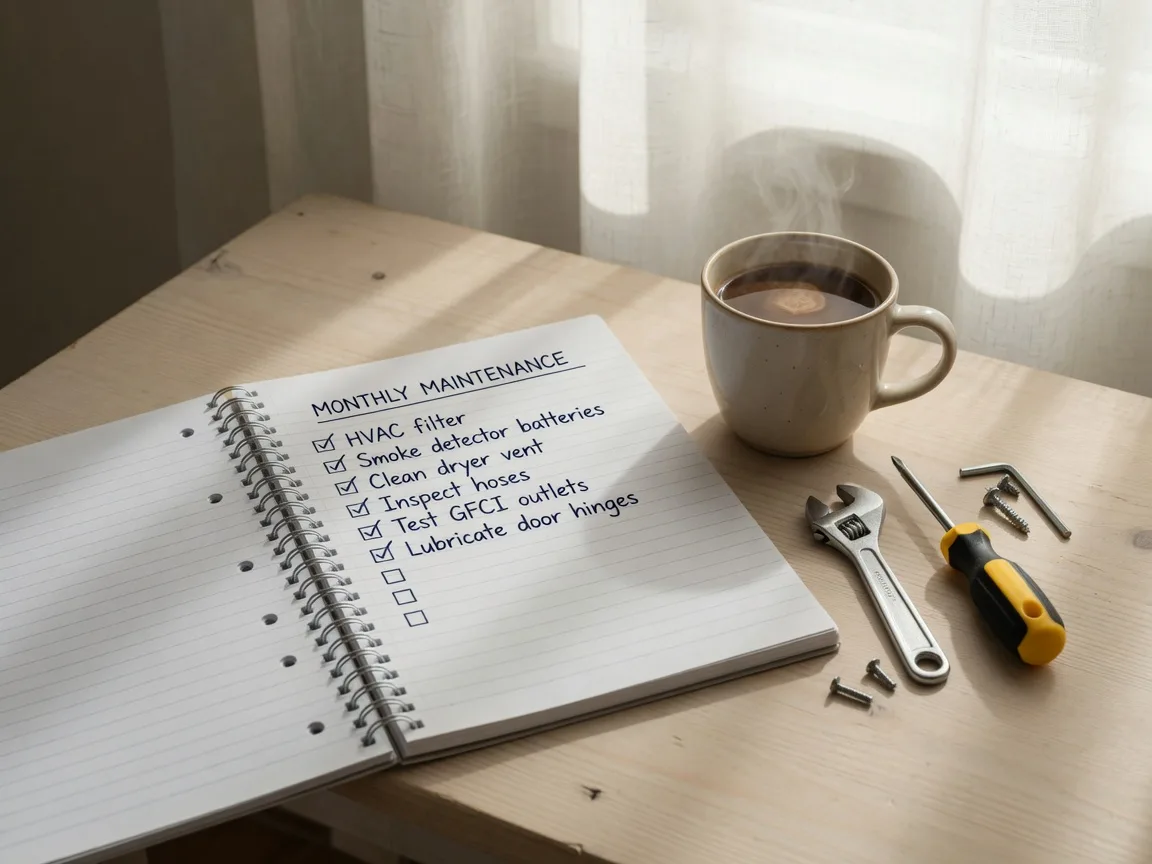
These eight tasks take about 15 minutes total and cover the most common causes of home emergencies. Set a recurring reminder on your phone for the first Saturday of every month and work through them while your coffee brews.
Quarterly Tasks
Every three months, take half an hour to dig a little deeper. These tasks catch issues that monthly checks miss and keep your home's systems running efficiently through every season.
Spring Maintenance Checklist
Spring in South Jersey means heavy rains and the start of humid weather. Everything you do now prepares your home for the summer season and addresses any damage winter left behind. Set aside a Saturday in March or early April.
Summer Maintenance Checklist
South Jersey summers are hot and humid. Your air conditioning system will earn its keep from June through September. Use a June weekend to make sure everything is ready for the heat.
Fall Maintenance Checklist
Fall in South Jersey brings beautiful foliage and then a lot of leaf cleanup. But more importantly, it is your last chance to prepare your home for freezing temperatures. A November freeze can destroy unprotected pipes and strain an unprepared heating system.
Winter Maintenance Checklist
Winter is mostly about monitoring and responding. Keep an eye on your home during and after every snowstorm or cold snap. A few minutes of inspection can catch ice dams, drafts, and freezing pipes before they become emergencies.
HVAC Maintenance Deep Dive
Your HVAC system is the most expensive mechanical system in your home and the one you rely on most. A new HVAC system costs $5,000 to $12,000. Proper maintenance can extend its life from 12 years to 20 years. Here is what matters most.
Filter Replacement Schedule by Filter Type
Basic fiberglass filters: replace every 30 days. Pleated filters (MERV 4 to 8): replace every 60 to 90 days. High-efficiency filters (MERV 11 or higher): replace every 60 to 90 days, but check monthly because they restrict airflow more. If you have pets or live near a busy road, change filters more often. Always use the correct size. A filter that does not fit lets unfiltered air bypass the system.
Professional Tune-Up Schedule
Schedule professional maintenance twice a year: once in spring for your air conditioning system and once in fall for your heating system. A typical tune-up includes cleaning coils, checking refrigerant levels, inspecting electrical connections, lubricating moving parts, and testing safety controls. Expect to pay $100 to $200 per visit. It is the best money you will spend on your home all year.
Signs Your System Needs Attention
Unusual noises (banging, squealing, grinding), weak airflow from vents, uneven temperatures between rooms, higher than normal energy bills, strange smells when the system runs, frequent cycling on and off, and ice forming on refrigerant lines in summer. If you notice any of these, call a professional before the system fails completely.
How to Clean Around Your Outdoor Unit
Keep at least two feet of clearance around your outdoor condenser unit. Trim back vegetation, remove leaves and debris, and hose off the fins gently once a year with a garden hose (never a pressure washer, which can bend the fins). Turn off power to the unit before cleaning. In winter, cover the top of the unit with a breathable cover or plywood to protect it from falling ice and snow.
Thermostat Programming Tips
Set your thermostat to 68 degrees in winter when you are home and awake, and lower it to 62 to 65 degrees when sleeping or away. In summer, set it to 78 degrees when home and 80 to 82 degrees when away. A programmable or smart thermostat handles this automatically. Each degree you lower the thermostat in winter saves about 1 percent on your heating bill.
Roof Inspection Guide
Your roof is your home's first defense against the elements. A quick ground-level inspection every season can catch problems before they become leaks. Never get on your roof unless you have proper safety equipment and experience. A ground inspection with binoculars is usually enough.
What to Look For From the Ground
Missing, cracked, or curling shingles. Dark patches that indicate moisture. Granules in your gutters (shingles shedding granules are aging). Moss or algae growth. Damaged flashing around chimneys, vents, and skylights. Sagging areas on the roofline.
When to Call a Professional
If you see any damage from the ground, if your roof is more than 15 years old, after any major storm with high winds or hail, or if you notice water stains on your ceiling or walls inside the home. A professional roof inspection typically costs $100 to $250 and can save you from an expensive leak repair.
Common South Jersey Roof Issues
Ice dams in winter, wind damage from nor'easters, moss growth on shaded north-facing slopes, and granule loss from asphalt shingles aging in our freeze-thaw climate. Ridge vents and flashing around chimneys are common leak points.
Age Considerations by Material
Asphalt shingles last 20 to 30 years. Wood shakes last 30 to 40 years. Slate and tile can last 50 to 100 years. If your roof is approaching the end of its expected life, start budgeting for replacement. A roof replacement in South Jersey typically costs $7,000 to $15,000 depending on size and material.
Gutter Maintenance
Clogged gutters are one of the most common causes of expensive home damage. Water backs up, overflows, and pools around your foundation. In winter, clogged gutters freeze and create ice dams that force water under your shingles. Clean gutters are not optional in South Jersey's climate.
Properly functioning gutters channel rainwater away from your foundation, prevent basement flooding, protect siding from water stains and rot, and prevent soil erosion around your home. Clean gutters also prevent mosquitoes from breeding in standing water.
Use a sturdy ladder placed on level ground. Wear gloves and safety glasses. Scoop debris by hand into a bucket hung from the ladder. Flush downspouts with a garden hose. Never lean the ladder against gutters, which can damage them. If you are not comfortable on a ladder, hire a professional. A gutter cleaning service costs $100 to $250 in South Jersey.
Mesh screens, foam inserts, and surface-tension guards all reduce how often you need to clean gutters. No guard eliminates cleaning entirely, but good ones can extend the interval from twice a year to once a year or less. Brush-style guards work well in areas with heavy leaf fall, like much of Burlington County.
Make sure downspouts carry water at least four to six feet away from your foundation. Use flexible extensions or splash blocks. In South Jersey, where clay soils are common, water that pools near the foundation can lead to basement moisture issues and settling.
Plumbing Maintenance
Plumbing problems cause the most urgent and damaging home emergencies. A few simple maintenance tasks can prevent the majority of plumbing disasters.
Flush your water heater once a year to remove sediment buildup. Sediment reduces efficiency, makes your water heater work harder, and shortens its lifespan. Connect a garden hose to the drain valve at the bottom, run the hose to a floor drain or outside, and open the valve until the water runs clear. In South Jersey, where water hardness varies by municipality, some homes may need flushing every six months.
Never pour grease or oil down kitchen drains. Use drain strainers in every sink to catch food particles and hair. Flush drains monthly with hot water and baking soda followed by vinegar. Avoid chemical drain cleaners, which damage pipes over time. If a drain is slow, try a plunger or a drain snake before calling a plumber.
Check for silent leaks by adding a few drops of food coloring to the tank. If color appears in the bowl without flushing, the flapper needs replacing. This simple fix costs under $10 and can save up to 200 gallons of water per day. Tighten loose toilet bolts and check for rocking toilets, which can damage the wax seal.
If your home was built before 1980 and has original clay or cast iron sewer pipes, consider scheduling a camera inspection every few years. Tree roots, scale buildup, and pipe degradation are common in older South Jersey homes. Signs of trouble include multiple slow drains, gurgling toilets, sewage odors, and patches of unusually green grass over the sewer line.
Creating Digital Reminders
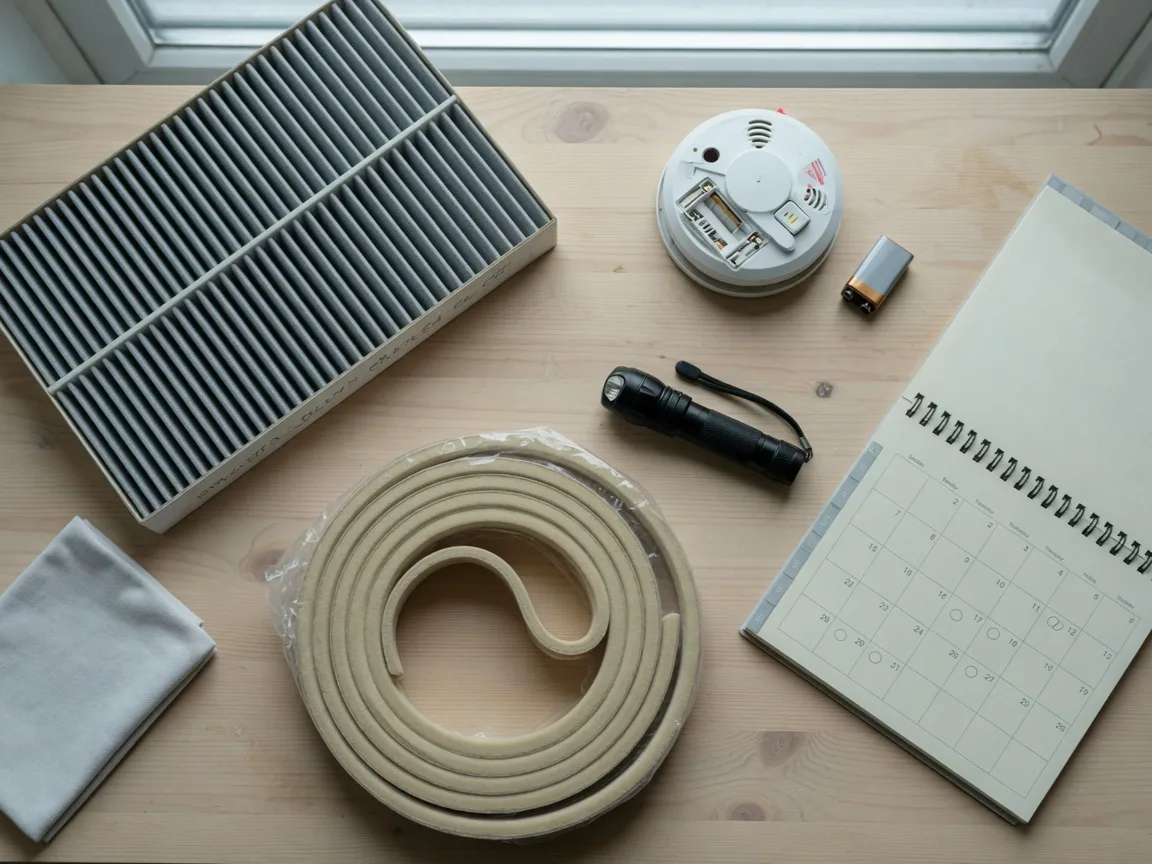
The best maintenance schedule in the world is useless if you forget to follow it. A simple digital system keeps everything on track without requiring you to remember anything.
Use Your Phone Calendar
Set recurring reminders for every task. Monthly: first Saturday morning filter check. Quarterly: first weekend of March, June, September, December. Seasonal: specific dates for spring and fall checklists. Set separate reminders for professional inspections. Use alerts that give you enough lead time to schedule appointments.
Home Management Apps
Apps like Centriq, HomeZada, and OurHome let you track tasks, store appliance manuals, log repairs and costs, and share access with household members. Some apps integrate with your calendar and send push notifications. Choose one and stick with it.
Setting Up Recurring Reminders
In your calendar app, set monthly tasks to repeat every month with no end date. Set seasonal tasks to repeat every 3 or 6 months. For annual professional inspections, set yearly reminders 30 days before you typically schedule them. This gives you time to book appointments before the season starts.
Share With Household Members
Share your maintenance calendar with everyone in your household. Create a shared note or document with emergency contact numbers, the location of shutoff valves, and the maintenance schedule. When everyone knows the system, the home runs smoother and nothing falls through the cracks.
Recommended Annual Professional Inspections
Some jobs are best left to trained professionals. These inspections catch problems you cannot see and keep your home's critical systems in good working order. Schedule them on a regular cycle and track the results in your maintenance log.
Twice yearly (spring and fall)
Annually
Annually if you have a fireplace
Annually
Every 3 to 5 years
Every 3 to 5 years
Common Mistakes to Avoid
I have seen these mistakes cost homeowners thousands of dollars over the years. A little awareness goes a long way.
Pro Tips
Small habits that experienced homeowners swear by. These practices turn maintenance from a chore into a system that protects your home for decades.
Frequently Asked Questions
Honest answers to the questions homeowners ask most about creating and following a maintenance schedule.
How much should I budget for home maintenance each year?
What is the single most important maintenance task I should never skip?
Should I DIY my maintenance or hire a professional?
How do I track all these maintenance tasks without getting overwhelmed?
What maintenance tasks add the most value to my home?
What happens if I skip maintenance entirely?
Key Takeaways
A simple maintenance schedule prevents expensive emergency repairs, keeps your home running efficiently, and protects your property value. Start with monthly tasks and build from there.
Budget 1 to 2 percent of your home value annually for maintenance. In South Jersey's climate, staying closer to 2 percent gives you a comfortable cushion.
Monthly tasks take 15 minutes. Seasonal checklists take a half day. Professional inspections take a phone call. Consistency is more important than perfection.
Track everything. A maintenance log with dates and costs helps with resale, warranty claims, and knowing when systems are due for replacement.
Build relationships with trusted local service providers before you need them in an emergency. The HomeCircle Trusted Partners directory is a great place to start.
Suggested Related Articles
These guides and resources will help you continue building your homeowner knowledge.
Your First 30 Days as a Homeowner
A day-by-day guide to your first month of homeownership, from changing locks to setting up utilities to finding trusted service providers.
Read ArticleHome Improvements That Add the Most Value
A data-driven look at which renovations give you the best return on investment in the South Jersey market.
Read ArticleShould You Replace Your Roof Before Selling?
A complete guide to help you decide whether to replace, repair, or disclose your roof when preparing to sell your home.
Read Article